TIYE Africa Sponsors Digital Literacy Training for Young Nigerians
June 2026
Nigeria has one of the largest youth populations in the world, and the opportunities available to young people will shape the country’s economic and digital future. Many of them, though, find the step from school to work harder than it should be. Employers now expect practical digital skills, and academic qualifications alone often aren’t enough.
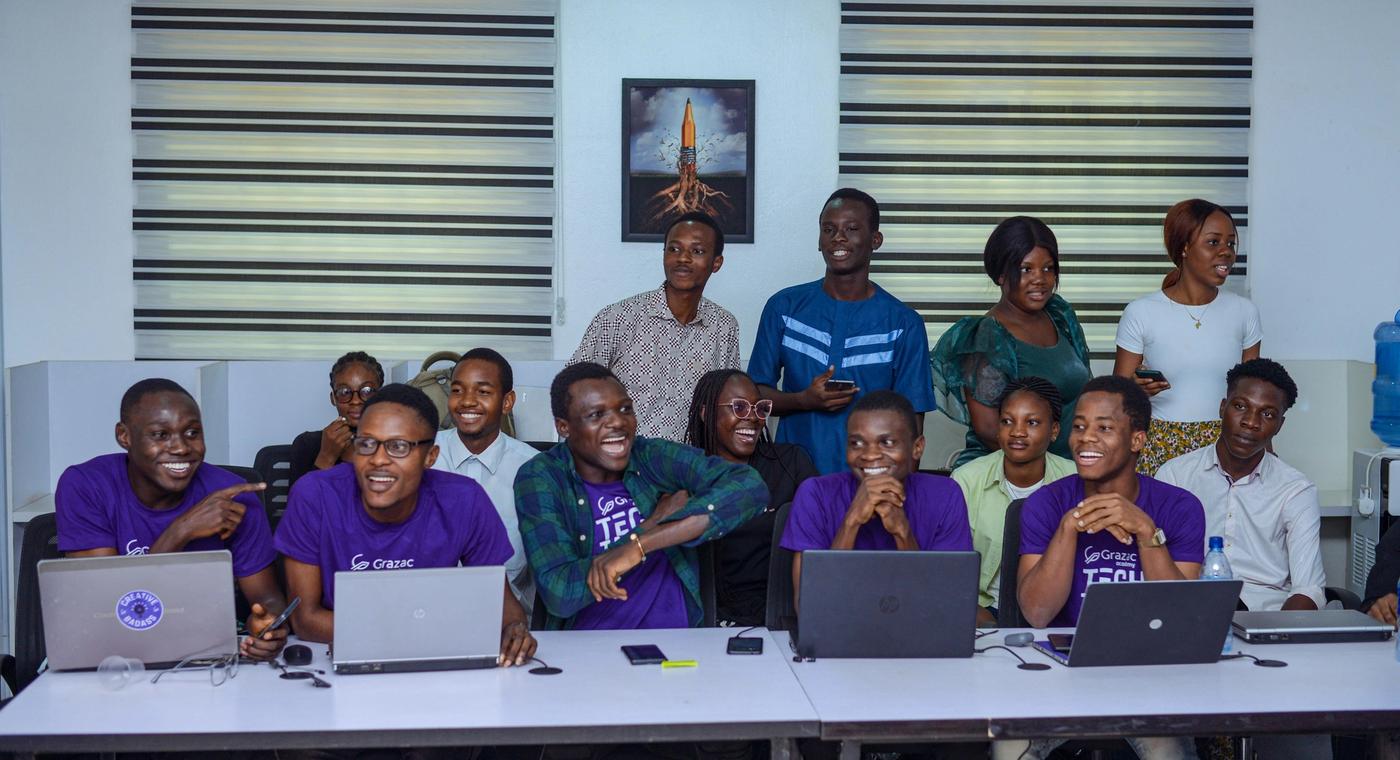
To help close that gap, we sponsored 200 young people through a three-month digital literacy programme in Abeokuta, Ogun State, which began in March 2026. The training was delivered by Grazac Academy, and the aim was to give participants skills they could use straight away, whether in school, at work, in a small business or in everyday life.
Why digital literacy matters
So much of how we learn, work, communicate and do business now happens on a screen. A young person who can use a computer or smartphone confidently, find reliable information online, keep their personal details safe and work well with others over the internet starts out with a real advantage.
But access to structured training is uneven. Many motivated young people can’t afford it, or have never had the chance to use the tools found in a modern workplace. By covering the cost for 200 participants, TIYE Africa removed that barrier for a group who might otherwise have missed out.
About Grazac Academy
Grazac Academy is run by Grazac, a technology company founded in 2018 that builds digital products for businesses and individuals. From the start, the company has focused on two things: Africa’s high rate of youth unemployment and helping people take part in the continent’s tech transformation. Alongside the academy, Grazac runs a co-working space in Abeokuta, Ogun State.
The academy teaches everything from foundational digital skills to specialist courses such as data analysis and product design. That range made it a good fit for this programme, since participants arrived at very different starting points, from complete beginners to people ready to build toward a specific career.
What participants learned
Over three months, the training stayed practical from start to finish. Participants began with the basics of using devices and getting around online, then learned how to protect their personal information and recognise common online risks. They practised creating documents, spreadsheets and presentations, and learned how to communicate professionally and work together online. The programme closed with a look at where these skills can lead: employment, freelancing, starting a business or further study in tech.
Ololade Islamiat shows how quickly those skills can pay off. She runs her own business, and before the training she had no computer skills at all. By the end of the programme, she was putting what she had learned to work in her business straight away.
Where it can lead
For many participants, this is only a first step. These foundations open the door to further training in software development, digital marketing, data analysis, cybersecurity, design and AI, and they make people more productive in non-technical careers too.
Iyiola Temitayo, a graduate of Grazac Academy’s product design track, shows how far that path can go:
“I always loved design but didn’t know how to turn it into a career. Grazac Academy taught me user research, wireframing and prototyping, and now I have a portfolio I’m proud of. It’s the best step I’ve taken as a product designer.” We hope some of our participants will follow a similar path. The young people in this cohort now have skills they can use to find work, grow a business or keep learning.
Follow TIYE Africa on [X](https://x.com/tiyeafrica), [Instagram](https://www.instagram.com/tiyeafrica) and [LinkedIn](https://www.linkedin.com/company/tiyeafrica/).
To learn more about Grazac Academy and its courses, visit [grazacacademy.com](https://grazacacademy.com)

Comments
No comments yet. Be the first to share your thoughts.
Leave a comment
Comments are reviewed before they appear.